Download the 2025 Focal Car Catalogue | Focal INSIDE Catalogue | Join our Mailing List!

Why Choose Coaxial Speakers for Global Audio Systems?

Choosing the right loudspeaker affects clarity, coverage, installation time, and long-term maintenance. For international audio projects, these details matter across different buildings, climates, languages, and operating standards. Coaxial speakers place the woofer and tweeter on the same acoustic axis, helping sound reach listeners from a consistent point. This design can create more even coverage in retail stores, transport areas, offices, hotels, and public venues. It also reduces the visual and installation complexity of using separate speaker units.

Imagine a hotel lobby with music playing near a polished stone wall. Guests may hear different tonal balances as they walk between the entrance, reception desk, and café. Properly selected coaxial speakers can reduce noticeable changes across those listening zones. Installers can also spend less time aligning separate drivers. That sounds simple. It is not always simple. Room shape, ceiling height, reverberation, amplifier matching, and speaker spacing still determine the final result. A compact design cannot correct poor acoustic planning.

Global audio systems also require dependable specifications and practical support. System designers should verify impedance, sensitivity, power handling, dispersion, environmental ratings, and replacement availability. They should follow manufacturer instructions, relevant IEC guidance, and local electrical and fire-safety requirements. One model may perform well in a quiet office but struggle in a reflective airport terminal. Field testing remains valuable, even when the datasheet looks convincing. The best choice is not automatically the most powerful speaker. It is the model that delivers intelligible, balanced sound within the project’s real conditions, budget, and maintenance plan.

Why Choose Coaxial Speakers for Global Audio Systems?

What Coaxial Speakers Are and How They Work

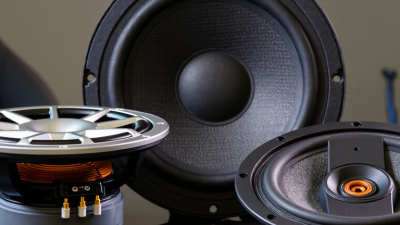
Coaxial speakers place two sound drivers on the same central axis. A larger woofer handles bass and much of the midrange. A smaller tweeter sits in front of it and reproduces high frequencies. This arrangement creates a compact, point-source design. Sound appears to come from one location, rather than from separate drivers spread across a panel.

The woofer moves air for voices, music, and low effects. Meanwhile, the tweeter uses a small diaphragm to deliver detail, such as consonants or cymbal edges. A crossover divides the incoming audio signal between them. In well-designed systems, this division reduces overlap and supports smoother coverage. Installers often choose coaxial speakers where space, consistent direction, and easier alignment matter. They can suit transport hubs, classrooms, retail areas, and outdoor public spaces. Still, coaxial does not mean flawless. Poor crossover tuning can create a sharp upper range or weak vocal presence. Room reflections may also change the result.

Tips: Check the speaker’s coverage angle before installation. Aim it toward the listening area, not simply toward the room’s center. Use measured equalization after mounting. Keep volume moderate during testing, then listen for speech clarity at the farthest seat. A quick test is useful, but it is not enough. Temperature, wall surfaces, and installation height can alter performance, so review the system under real operating conditions.

Key Advantages of Coaxial Speakers in Global Audio Systems

Coaxial speakers combine high-frequency and low-frequency drivers around one acoustic axis. This design offers key advantages in global audio systems, especially where consistent coverage matters across different venues. A single enclosure can deliver a more unified wavefront than separated drivers. That helps listeners hear stable vocals and instruments while moving through a room.
Their compact structure also simplifies transport, mounting, and aiming. This is valuable for international projects with varied building layouts and installation teams.
In a retail space, a ceiling-mounted coaxial speaker can cover aisles without large visual equipment. In a transport terminal, controlled dispersion can reduce sound spilling into nearby zones.

Installers can spend less time aligning separate enclosures. Fewer components can also reduce wiring points and maintenance tasks.

However, coaxial speakers are not a universal fix. Very large spaces may require additional low-frequency support or distributed speaker zones. High-output applications can also expose thermal and coverage limits.

I would not select a model by sensitivity alone. Room reverberation, ceiling height, impedance, amplifier capacity, and local safety requirements need careful checking.

A practical test with spoken announcements is useful because specifications may not predict every listening position. Small tonal differences can become obvious near reflective glass or hard flooring. That is where a technically good system may still feel uneven.

How Coaxial Speakers Compare with Component Speaker Designs

Why Choose Coaxial Speakers for Global Audio Systems?

How Coaxial Speakers Compare with Component Speaker Designs

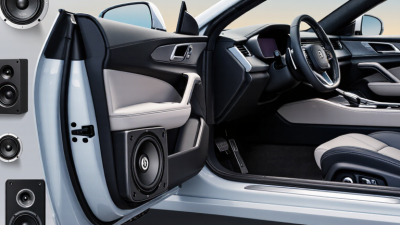
A coaxial speaker places its tweeter inside the woofer’s central axis. This arrangement creates a compact, nearly point-source design. In practical installations, that alignment can produce stable sound across a wider listening area. It also reduces wiring and cabinet space. A technician can mount one unit behind a ceiling grille or inside a vehicle door. Setup is usually quicker.

Component speakers separate the woofer, tweeter, and crossover network. This separation allows more control over placement and imaging. A tweeter can sit near ear level, while the woofer remains lower in the door or wall. That spacing often improves stereo detail and vocal focus. However, installation needs careful measurement, extra cable routing, and proper crossover positioning. Small placement errors may create uneven high frequencies.

For global audio systems, coaxial designs suit projects with varied rooms, climates, and local installation skills. Their simpler structure can reduce service time across multiple sites. I have seen compact coaxial systems perform convincingly in small retail spaces and transport interiors. Still, they are not automatically the better choice. High-output venues may need the flexibility of component systems. Coaxial tweeters can also sound slightly constrained at extreme volume levels. That limitation deserves honest attention. Engineers should test coverage, sensitivity, listening distance, and amplifier matching before approving a common design worldwide. A tidy specification sheet cannot replace listening tests.

Why Choose Coaxial Speakers for Global Audio Systems?

Coaxial speakers combine the tweeter and woofer on one axis, making them easier to install in space-constrained systems. Component speakers separate these drivers, generally allowing more control over soundstage placement and future upgrades.

Comparative index from 1 to 5 based on common design characteristics: 1 indicates a lower advantage and 5 indicates a higher advantage. The values are general engineering comparisons rather than measurements from a specific product.

Factors for Selecting Coaxial Speakers Across Different Applications

Why Choose Coaxial Speakers for Global Audio Systems?

Factors for Selecting Coaxial Speakers Across Different Applications

Coaxial speakers place multiple drivers around one acoustic axis. This design can improve coverage in classrooms, retail spaces, transport hubs, and outdoor venues. Selection should begin with the application, not the product label. A speech system needs clear vocal frequencies and controlled dispersion. A music venue needs smoother response, higher output, and stronger low-frequency support. The World Health Organization reports that more than 1.5 billion people live with hearing loss. Intelligibility therefore deserves serious attention.

Room size changes the decision. Check sensitivity, continuous power handling, nominal impedance, and usable frequency range. A 90-degree dispersion pattern may suit a small room, while wider coverage can reduce speaker count in open areas. However, wide dispersion may increase reflections on glass or concrete. That can weaken speech clarity. Acoustic treatment still matters. It cannot be replaced by a coaxial design.

Global installations also require environmental planning. Outdoor models should specify water and dust resistance, while humid sites need corrosion-conscious materials. Compare test methods carefully. IEC 60268-5 provides useful loudspeaker performance guidance, but published measurements may not reflect real rooms. AVIXA’s 2024 industry outlook places the professional audiovisual sector above 300 billion dollars annually, showing how varied these systems have become. Field experience suggests that identical speakers can behave differently after mounting height, equalization, and room geometry change. A spreadsheet helps. It does not hear the room.

Installation, Maintenance, and Performance Optimization Considerations

Why Choose Coaxial Speakers for Global Audio Systems?

Coaxial speakers place the high- and low-frequency drivers on one acoustic axis. This design can simplify installation in distributed audio systems. Before mounting, confirm the enclosure depth and the required listening coverage. A shallow ceiling may leave little room for safe cable routing. Use the correct polarity, secure every terminal, and protect connections from moisture. Small errors can create weak bass or uneven coverage.

Maintenance should begin with a documented inspection schedule. Check grilles, fasteners, connectors, and cable strain points every few months. Dust can reduce high-frequency output over time. In humid locations, inspect corrosion more often. Play a familiar test track and listen from several seats. A calibrated sound-level meter provides stronger evidence than hearing alone. Keep records of failed components and unusual vibration.

Performance optimization requires careful system tuning. Set the crossover according to the speaker’s operating range and amplifier limits. Apply equalization gently, because excessive boost can cause heat and distortion. Use delay settings when multiple speaker zones overlap. Room reflections may still produce harshness, even after measurement. I have found that a flat response is not always the most natural result. Sometimes, the first setting sounds better than the “perfect” one. Recheck levels after furniture, wall finishes, or room use changes. Local electrical and safety requirements should guide every installation.

Why Choose Coaxial Speakers for Global Audio Systems? - Installation, Maintenance, and Performance Optimization Considerations

Evaluation Dimension Typical Coaxial Speaker Consideration Practical Installation Guidance Maintenance or Optimization Action Operational Benefit
System Architecture High-frequency and low-frequency drivers are integrated on a common axis. Use when consistent coverage is required from a compact loudspeaker position. Confirm the speaker’s intended mounting orientation and coverage pattern before final installation. Simplifies system planning and helps maintain stable tonal balance across the listening area.
Frequency Response Many full-range coaxial models cover approximately 60 Hz to 20 kHz, depending on cabinet size and design. Review the manufacturer’s measured response and match the speaker to speech, music, or background-audio requirements. Use equalization only for measured system correction; avoid excessive low-frequency boost. Supports clear voice reproduction and broad-band music playback with fewer separate components.
Coverage Consistency The shared acoustic axis can provide more uniform directivity than widely separated drivers. Aim each speaker toward the principal listening zone and avoid obstructions near the grille. Check coverage at multiple listener positions rather than tuning from a single seat. Reduces noticeable tonal changes as listeners move through the coverage area.
Power Matching Common nominal impedance values include 4 Ω and 8 Ω; continuous power ratings vary by model. Match amplifier load settings, output capability, and speaker impedance before connecting the system. Monitor for clipping, overheating, or audible distortion during high-demand operation. Improves reliability and reduces the risk of thermal or mechanical driver damage.
Sensitivity and SPL Planning Typical sensitivity is often approximately 85–95 dB SPL at 1 W/1 m, depending on the design. Estimate distance loss, target listening level, and available amplifier headroom for each zone. Use measurement microphones or SPL meters to verify level consistency between zones. Enables predictable volume distribution without unnecessarily oversized amplification.
Mounting Location Wall, ceiling, surface, and enclosure mounting each influence dispersion and bass response. Use suitable brackets, anchors, and safety cables; maintain clearance from heat and moisture sources. Inspect fasteners, brackets, and cable strain relief periodically, especially in public installations. Improves physical safety and preserves the intended acoustic performance.
Cable Selection Cable resistance becomes more significant over long runs or with low-impedance speakers. Select conductor size according to cable length, impedance, current demand, and local electrical codes. Check connectors for corrosion, loose terminals, and damaged insulation. Limits voltage drop and helps maintain output level and frequency response.
Polarity and Phase Incorrect polarity can cause cancellation, especially in shared low-frequency coverage areas. Maintain consistent positive and negative terminal connections throughout the system. Perform a polarity test after rewiring, amplifier replacement, or zone expansion. Preserves bass impact, intelligibility, and coherent imaging.
Equalization Room reflections and mounting surfaces can create peaks and dips that are not caused by the speaker alone. Measure the installed response at representative positions before applying corrective filters. Prefer moderate cuts over aggressive boosts and keep filters within the speaker’s safe operating range. Improves clarity while reducing unnecessary amplifier and driver workload.
Acoustic Delay and Alignment Multiple loudspeakers or subwoofers may arrive at different times at the listening position. Document speaker locations and apply digital delay where the system processor supports it. Recheck alignment after moving speakers, changing coverage zones, or modifying room layouts. Reduces comb filtering and improves transition between distributed speakers.
Environmental Protection Indoor and outdoor models have different resistance to moisture, dust, temperature, and ultraviolet exposure. Verify the enclosure’s environmental rating and use approved covers or glands where required. Inspect grilles, seals, terminals, and drainage paths at least twice yearly in demanding environments. Extends service life and reduces failures caused by contamination or moisture ingress.
Routine Cleaning Dust and debris can obstruct grilles and affect airflow or high-frequency output. Keep the front of the speaker unobstructed and avoid placing materials directly against the grille. Use a soft, dry brush or low-pressure vacuum; do not spray liquid onto the driver assembly. Maintains acoustic output and reduces premature component deterioration.
System Monitoring Distributed systems benefit from zone-based monitoring of level, faults, and amplifier status. Label cables and zones clearly and record baseline operating levels during commissioning. Compare periodic measurements with baseline data to identify gradual performance changes. Supports faster troubleshooting and more consistent performance across international sites.
Documentation Global projects may involve different installers, electrical standards, and service schedules. Record wiring diagrams, mounting details, impedance settings, DSP parameters, and test results. Update the record after every repair, relocation, firmware change, or system expansion. Improves handover quality, repeatability, and long-term serviceability.