What Is a Bed Fan and How Does It Work?
A Bed Fan is a compact sleep device designed to move cool air beneath your blankets. It does not cool the entire bedroom like an air conditioner. Instead, it creates a personal airflow zone around your body.
The system is simple. A small fan sits beside or beneath the bed. It draws in room air, then pushes that air through a flexible hose. The hose directs airflow under the covers, where heat and moisture often collect. Many models offer adjustable speeds, timers, and temperature controls. Some connect with smartphone applications or climate sensors.
Small changes matter.
Sleep physician Dr. Michael Breus has said, “The optimal temperature for sleep is between 65 and 68 degrees Fahrenheit.” A Bed Fan can support that cooler sleeping environment without lowering the temperature of the entire room. This may help hot sleepers, couples with different comfort preferences, or people who dislike heavy air conditioning.
From a practical perspective, the strongest benefit is targeted cooling. You can keep the room warmer while reducing the trapped heat around your legs and torso. However, airflow is not automatically comfortable. Excessive speed may create noise, dryness, or an unpleasant draft. I also found that bedding thickness changes the result. A heavy comforter can soften airflow, while thin sheets may feel too direct.
That limitation deserves attention. A Bed Fan is not a medical treatment, and it cannot solve every sleep problem. Its value depends on room temperature, bedding, humidity, and personal sensitivity. This guide explains how the device works, what features matter, and where its promises may need realistic expectations.
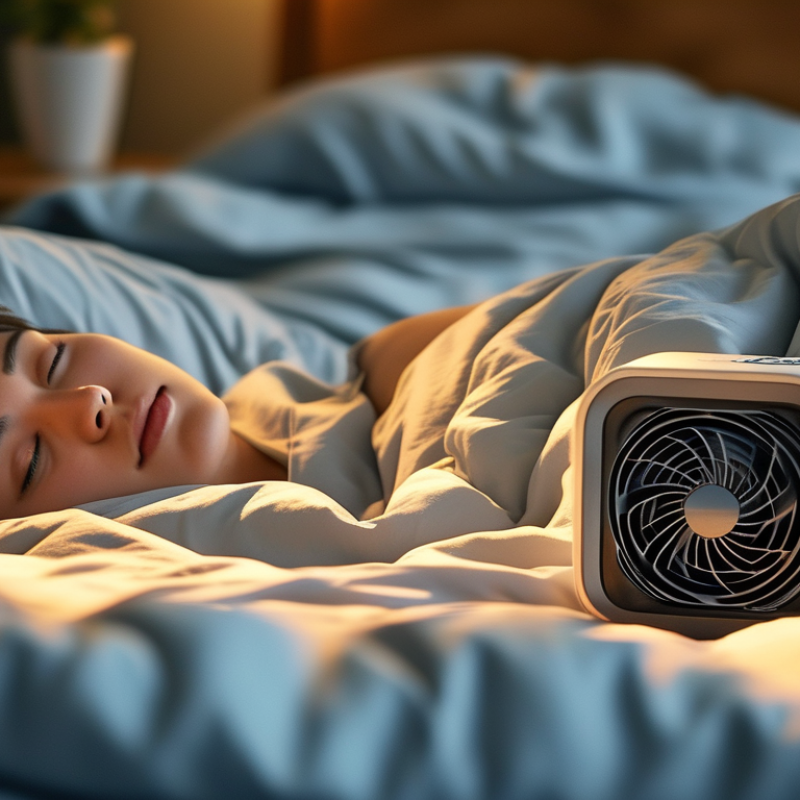
What Is a Bed Fan?
A bed fan is a compact cooling device designed to move air beneath or across your bedding. It creates a focused breeze near your body, rather than cooling the entire bedroom. Some models sit beside the bed and use a flexible duct. Others fit under the mattress and push air upward. The airflow helps sweat evaporate from your skin, which can make warm nights feel more comfortable. That distinction matters. A bed fan is not a replacement for air conditioning, and it does not remove much heat from the room.
Its performance depends on room temperature, humidity, bedding thickness, and fan speed. ASHRAE Standard 55 identifies air movement, humidity, clothing, and activity as key factors in thermal comfort. Therefore, one setting cannot suit every sleeper. The International Energy Agency’s The Future of Cooling report also describes space cooling as a rapidly growing source of electricity demand. Localized airflow may reduce the need to cool an entire room, although the actual savings depend on the household and climate.
In practice, a bed fan should deliver gentle, steady air without creating noise or dry, uncomfortable skin. A timer can prevent unnecessary overnight operation. Filters and ducts also need regular cleaning. Small details matter. The concept is useful, but not flawless. People with allergies, sensitive skin, or breathing concerns should consider airflow direction carefully and follow professional medical advice.
How Does a Bed Fan Work?
A bed fan works by moving air through the space beneath or beside your bed. Its motor turns the fan blades, creating a steady stream of air toward the mattress and blankets. This airflow removes warm air trapped around your body, helping sweat evaporate more quickly. The cooling effect feels noticeable, even though the fan does not actually lower the room’s temperature.
In practical use, airflow direction matters. A fan placed near the foot of the bed can push cool room air under the covers. Some models use a flexible duct to guide air between the sheet and blanket. A low setting often feels more comfortable because strong airflow may dry your eyes or disturb light bedding. My first assumption was that a bed fan would cool the entire mattress. It does not. It mainly improves the small area around your sleeping body.
Many bed fans include timers, temperature controls, or adjustable speed settings. These features can reduce noise and prevent excessive cooling during the night. A thermometer may help, but personal comfort remains important. Humid rooms can make the airflow feel less effective because moisture evaporates slowly. Keep the intake area clear of clothing and check the power cord regularly. Small details matter. A poorly positioned fan may create noise without delivering useful airflow. For safer use, place the unit on a stable surface and follow its electrical instructions carefully.
Key Components of a Bed Fan
A bed fan is a compact airflow device designed to move air beneath or across bedding. Its main housing contains the motor, fan blades, and protective grille. The motor spins the blades, creating a steady stream of air. A stable grille helps prevent fabric from touching moving parts. Small details matter here. Loose sheets can block airflow.
The air intake draws room air into the unit, while the outlet directs it toward the sleeping area. Some models use a flexible duct, which guides air from beside the bed to a position under the covers. Others sit near the mattress and push air directly upward. A controller adjusts fan speed, and some systems include a timer or temperature sensor. These controls can reduce noise and prevent unnecessary operation during cooler hours.
The power supply and internal wiring must remain protected from moisture and heavy pressure. A well-designed unit should also have ventilation around the motor to limit heat buildup. However, a bed fan does not produce refrigerated air. It mainly improves evaporation and air circulation around the body. The result may feel cooler, especially with light bedding. Room humidity changes that experience. My first assumption was that stronger airflow always meant better comfort, but that is not quite true. Excessive airflow can dry the skin, disturb sleep, or create a cold spot. A quieter, adjustable fan is often more practical than the most powerful one.
What Is a Bed Fan and How Does It Work?
A bed fan moves room air through a fan motor and impeller, then directs the airflow through a hose or outlet toward the sleeping area. The controller adjusts fan speed, while a timer or temperature sensor can regulate operation.
The fan motor and impeller determine airflow, while the controller manages speed and power. Compact bed fans commonly operate at only a few watts on low settings and below about 20 watts at higher settings. Actual airflow and energy use vary with hose length, outlet design, filters, and fan construction.
Types and Features of Bed Fans
A bed fan is a compact cooling device designed to move air beneath or across your bedding. Unlike a standard room fan, it targets the sleeping area directly. This can reduce trapped heat without cooling the entire room. In practical use, the airflow feels like a gentle stream around your legs and torso. However, comfort depends on sheet thickness, room temperature, and personal sensitivity.
Bed fans generally come in three types. Under-bed models push air through a flexible tube beneath the sheets. Bedside models sit near the mattress and direct airflow across the surface. Headboard or clip-on designs attach to nearby furniture and provide adjustable circulation. Useful features include multiple speed levels, remote controls, sleep timers, quiet motors, and temperature sensors. A washable intake filter is helpful because bedroom dust can collect quickly. Some models include heated airflow, though this feature may feel too dry or intense for certain sleepers. Noise claims can also be subjective. A fan that seems quiet during the day may sound noticeable at night.
Tips: Choose a model with gradual speed control, not only high and low settings. Check whether the tube bends smoothly without collapsing. Keep air openings clear of blankets and inspect cables regularly. Test the lowest setting first. I sometimes prefer less airflow than expected, especially during colder nights. Also, measure the space beside your bed before buying; a compact design can still become awkward in a narrow room.