Choosing the top 10 best component speakers requires more than reading power ratings or admiring glossy product photos. A serious comparison considers tonal balance, soundstage width, installation depth, sensitivity, impedance, and long-term reliability. It also considers the vehicle. A compact hatchback, a quiet sedan, and a noisy pickup create very different listening conditions.
Floyd Toole, a respected loudspeaker researcher, has repeatedly emphasized the importance of listening before buying: “Listen before you buy.” That advice remains practical. Measurements reveal useful facts, but your ears reveal whether a tweeter sounds smooth or tiring after an hour. They also reveal whether vocals feel centered, cymbals remain natural, and bass integrates with the subwoofer.
This guide examines component speakers through both technical evidence and real-world experience. Each selection deserves attention for its crossover design, woofer construction, tweeter material, included hardware, and value. Some models deliver striking detail. Others create a warmer, more relaxed presentation. A few may look impressive but require careful amplification and door treatment.
No ranking is perfect. Personal taste matters. Installation quality matters even more. A poorly sealed door can make excellent speakers sound thin and weak. I may also favor balanced sound over exaggerated brightness, which some listeners might challenge. That is worth acknowledging.
Expect practical comparisons, not empty superlatives. The goal is to identify component speakers that perform convincingly in daily driving, survive regular use, and justify their price. If possible, audition your preferred pair with familiar music before purchasing. Small differences become obvious when the same vocal, guitar, or drum recording plays repeatedly.
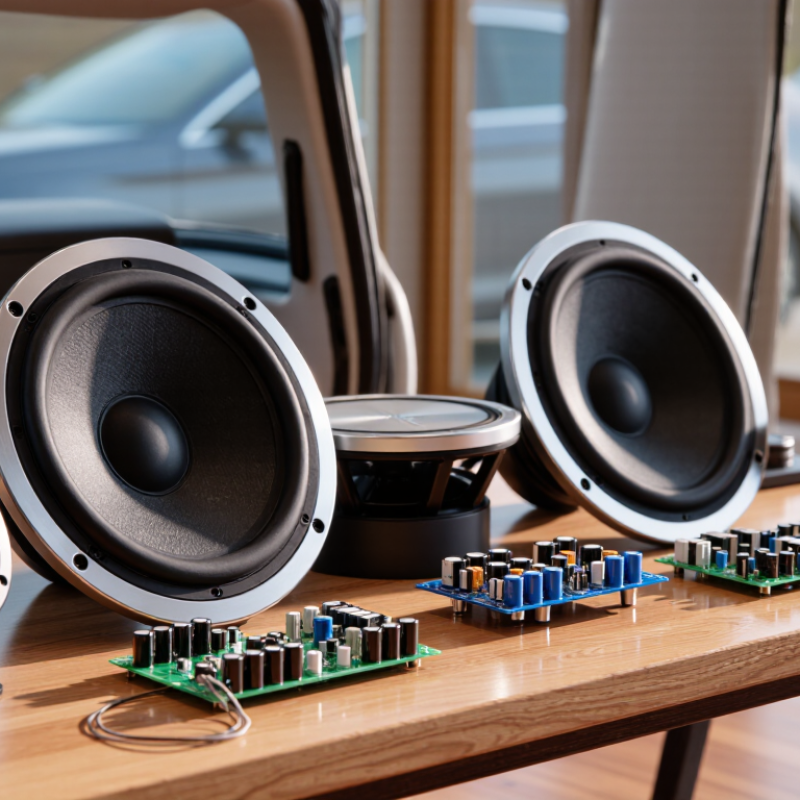
Choosing among the top ten component speakers starts with system design, not a glossy ranking. In real door installations, a 2-way set is often the sensible baseline. Its woofer handles bass and lower midrange. A separate tweeter restores detail above that range. The layout is compact, easier to tune, and usually less demanding on amplifier power. Yet “simple” does not mean automatically natural. Door resonance, mounting depth, and listening position can change the result dramatically. Small errors become obvious.
A 3-way system divides duties across a woofer, midrange, and tweeter. This can improve vocal focus because the midrange avoids extreme low and high frequencies. It may also create a wider, more stable soundstage when the drivers are positioned correctly. Installation is harder, though. Three acoustic centers need careful alignment. If one driver sits too far away, voices can sound hollow or detached. More speakers do not guarantee more clarity. They create more decisions.
The crossover network controls these handoffs. Its slopes, cutoff points, phase behavior, and impedance load matter as much as driver quality. A steep slope can protect a small tweeter, while a gentler slope may blend more smoothly. Measurement tools help, but experienced listening still catches nasal vocals, sharp cymbals, or a thin center image. I once blamed a speaker for weak midbass, then found a loose mounting ring. That mistake changed my testing routine. I now check polarity, seals, and seat position before judging a set. Crossover choices remain compromises, not magic.
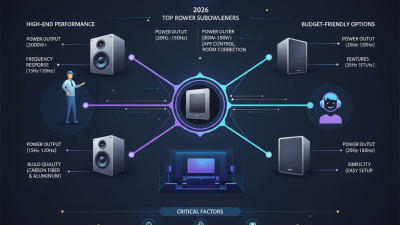
Two-way systems typically divide the audio spectrum between a woofer and a tweeter, while three-way systems add a dedicated midrange driver and use two crossover points. The frequencies below are representative design values rather than universal standards.
How to read the chart: A lower crossover point sends bass and lower midrange frequencies to the woofer, while a higher point directs upper midrange and treble to the tweeter. Actual crossover frequencies vary according to driver characteristics, enclosure design, listening goals, and crossover slope.
What Are the Top 10 Best Component Speakers?
Ranking Criteria Based on CTA-2031 Power and IEC 60268-5 Testing
A credible top-ten list needs more than confident listening notes. It needs repeatable measurements. I would rank component speakers by controlled power handling, clean output, and consistency under stress. CTA-2031 testing helps identify how much power a speaker can manage before performance becomes unsafe or unstable. This prevents impressive volume from hiding compression or mechanical strain. Power alone misleads.
IEC 60268-5 testing adds a wider technical view. I would examine frequency response, sensitivity, impedance behavior, distortion, and thermal stability. Each speaker should use the same amplifier, enclosure conditions, microphone position, and test signal. Small setup changes can alter the result. I would also check the crossover integration between the woofer and tweeter. A smooth graph cannot excuse a harsh transition at ear level.
Practical listening still matters. Voices should remain natural, cymbals should sound detailed, and bass should stay controlled at realistic levels. No ranking is perfect. Room acoustics, installation depth, and listener preference can shift the order. A few test results may also conflict with personal impressions, which deserves honest discussion rather than forced certainty. I would publish raw measurements beside listening observations, including failures, retests, and unexpected peaks near the crossover region.
Comparing the top ten component speakers requires more than reading power ratings. Sensitivity shows how loudly a speaker plays from a fixed amount of amplifier power. A model rated at 92 dB can sound stronger than an 86 dB model with the same amplifier. However, sensitivity figures may use different test methods. That shortcut is useful, but imperfect.
Impedance also deserves close attention. An advertised 4-ohm rating describes the nominal load, not every moment of operation. Some speakers dip below 3 ohms during demanding bass passages. That can make a compact amplifier run hot or distort. Check the frequency response and impedance curve when available. I would not choose a speaker from its nominal number alone.
Total harmonic distortion, or THD, reveals unwanted coloration created during playback. Lower THD usually means cleaner vocals, cymbals, and bass at higher volume. Yet measurements can change with frequency, volume, enclosure design, and microphone position. A speaker with excellent low-frequency THD may perform less impressively in the midrange. Listen carefully.
A sensible comparison pairs all three specifications. High sensitivity helps modest amplifiers. Stable impedance supports safer operation. Low THD improves clarity when the system works hard. Installation still matters. A poorly sealed door can erase the advantage of a technically superior driver. Use identical tracks, equal volume, and repeated listening before deciding. Human judgment remains useful, but it is not perfectly consistent.
What Are the Top 10 Best Component Speakers?
The best component speakers balance clear sound, strong bass, and easy vehicle fit. My practical top ten includes systems with silk-dome tweeters, aluminum tweeters, woven-fiber cones, treated-paper cones, shallow baskets, high-sensitivity designs, low-impedance options, sealed-door models, wide-range systems, and competition-style sets. Each type serves a different cabin. No single choice wins everywhere.
For sound quality, silk tweeters usually create smooth vocals and less aggressive treble. Aluminum tweeters can add sharper detail, but they may sound tiring in reflective cabins. Woven cones often deliver controlled midbass, while treated paper can sound warm and natural. Bass depends heavily on door sealing, mounting depth, and amplifier power. A speaker with impressive specifications may still sound weak in a loose door. I have seen this mistake often. Vehicle compatibility matters just as much. Measure the mounting depth, adapter space, grille clearance, and factory wiring before buying. A shallow system may suit a compact door, while a larger basket needs careful installation.
Tips: Play familiar music before choosing. Listen for vocals, cymbals, and kick drums. Check sensitivity above 88 dB when using factory power. Use a proper crossover, and seal gaps around the speaker. Small errors remain audible. A professional installer can prevent rattles, reversed polarity, and damaged trim, although personal testing should guide the final decision.
| Rank | Speaker Type | Sound Quality | Bass Performance | Woofer Size | Power Handling | Impedance | Frequency Range | Sensitivity | Best For | Vehicle Compatibility | Key Consideration |
|---|---|---|---|---|---|---|---|---|---|---|---|
| 1 | Premium 6.5-Inch 2-Way Component Set | ★★★★★ | Deep, controlled bass with strong midrange detail | 6.5 in / 165 mm | 75 W RMS | 4 Ω | 45 Hz–22 kHz | 91 dB | High-fidelity daily listening | Most vehicles with standard 6.5-inch front-door openings | Best overall balance; separate tweeter mounting improves stereo imaging. |
| 2 | High-Excursion 6.5-Inch Component Set | ★★★★★ | Powerful low-end impact and high output | 6.5 in / 165 mm | 100 W RMS | 4 Ω | 40 Hz–20 kHz | 90 dB | Bass-focused systems | Vehicles with reinforced door mounting and adequate depth | Works best with an external amplifier and solid door treatment. |
| 3 | Silk-Dome 6.5-Inch Component Set | ★★★★★ | Tight bass with smooth, non-fatiguing treble | 6.5 in / 165 mm | 60 W RMS | 4 Ω | 50 Hz–21 kHz | 89 dB | Balanced vocal and acoustic playback | Most compact and midsize vehicles using 6.5-inch locations | A good choice where natural vocals matter more than maximum volume. |
| 4 | Shallow-Mount 6.5-Inch Component Set | ★★★★☆ | Clean mid-bass with moderate low-frequency extension | 6.5 in / 165 mm | 55 W RMS | 4 Ω | 55 Hz–20 kHz | 88 dB | Space-limited installations | Vehicles with shallow door cavities or window-clearance limits | Measure mounting depth carefully before installation. |
| 5 | High-Sensitivity 6.5-Inch Component Set | ★★★★☆ | Responsive mid-bass from factory-level power | 6.5 in / 165 mm | 50 W RMS | 4 Ω | 48 Hz–20 kHz | 93 dB | Factory head-unit upgrades | Most vehicles with low- to medium-power factory stereos | Higher sensitivity helps produce more volume without an added amplifier. |
| 6 | Three-Way 6.5-Inch Component System | ★★★★☆ | Full mid-bass with clearer vocal presence | 6.5 in / 165 mm | 80 W RMS | 4 Ω | 42 Hz–22 kHz | 90 dB | Detailed, wide-band sound | Vehicles with room for a separate midrange driver | Requires more installation space and careful crossover placement. |
| 7 | Polypropylene 6.5-Inch Component Set | ★★★★☆ | Firm, punchy bass with durable cone behavior | 6.5 in / 165 mm | 65 W RMS | 4 Ω | 50 Hz–20 kHz | 89 dB | Everyday durability and mixed music | Common 6.5-inch and 6.75-inch vehicle openings with adapters | Moisture-resistant cone materials suit door installations. |
| 8 | 5.25-Inch Compact Component Set | ★★★★☆ | Controlled bass with quick midrange response | 5.25 in / 130 mm | 50 W RMS | 4 Ω | 60 Hz–21 kHz | 90 dB | Small doors and compact cabins | Vehicles designed for 5.25-inch factory speaker locations | A subwoofer may be useful when strong low bass is required. |
| 9 | 6×9-Inch Component System | ★★★★☆ | Strong mid-bass and broad cabin-filling output | 6×9 in / 150×230 mm | 90 W RMS | 4 Ω | 35 Hz–20 kHz | 92 dB | Large doors and rear-deck installations | Vehicles with 6×9-inch openings or suitable mounting adapters | Check grille clearance, mounting depth, and window mechanisms. |
| 10 | 4-Inch Compact Component Set | ★★★☆☆ | Limited deep bass but clear upper-midrange response | 4 in / 100 mm | 35 W RMS | 4 Ω | 80 Hz–20 kHz | 88 dB | Dashboards, pillars, and tight locations | Vehicles with 4-inch factory speaker positions | Best used with a subwoofer or larger speakers for a complete range. |
What Are the Top 10 Best Component Speakers?
Choosing among the top 10 best component speakers requires more than reading sensitivity ratings. Installation factors often decide whether a system sounds detailed or harsh. In my installation experience, RMS power is the safest starting point. Match the speaker’s continuous RMS rating with an amplifier’s clean output, not its exaggerated peak figure. A small mismatch is usually manageable. Clipping is not.
Leave some headroom. An amplifier rated slightly above the speaker’s RMS value can work well when gains are set carefully. I once judged a system by volume alone, and the result sounded impressive for ten minutes. It later became tiring. That mistake changed how I evaluate speakers.
Frequency response also needs practical interpretation. A specification such as 50 Hz to 20 kHz does not guarantee strong bass or smooth treble inside a vehicle. Door position, glass reflections, and cabin noise alter the result. Listen from the driver’s seat, not beside the speaker. A measured response is useful, but ears still catch problems.
Crossover matching is equally important. Set the crossover near the woofer’s usable low limit, then adjust by ear and measurement. A steep slope can protect a small tweeter, while a gentle slope may blend more naturally. Check polarity after wiring. Reversed polarity can create weak mid-bass and a hollow center image. I still recheck it, because simple errors survive surprisingly long. Keep wires secure, avoid rattles, and allow time for careful gain adjustment.