
Download the 2025 Focal Car Catalogue | Focal INSIDE Catalogue | Join our Mailing List!

How to Choose a Carbide Furnace in 2026?

Choosing a Carbide Furnace in 2026 requires more than comparing purchase prices. The right model must match your material, production target, power supply, and operating environment. A furnace designed for one carbide process may perform poorly in another plant.

Start with the process details. Check the required temperature range, feed size, reaction time, and expected output. Review the furnace’s electrode system, refractory lining, cooling design, and automation controls. These components face intense heat and continuous mechanical stress. Small weaknesses can cause unstable production.

Look closely at energy performance. Ask suppliers for measured consumption data, not only advertising claims. A practical comparison should include electrode use, heat recovery, maintenance hours, and downtime records. Request references from facilities with similar capacity and raw materials. Their experience can reveal problems that brochures often miss.

Safety must guide every decision. Confirm emergency shutdown functions, gas monitoring, ventilation, insulation, and operator access. Verify compliance with applicable industrial standards in your region. Qualified engineers should review electrical loading, foundation strength, and cooling-water protection before installation.

Cost matters, but it is not the whole story. A lower-priced furnace may require more repairs, power, or specialist labor. A premium system may also disappoint if training and spare parts are weak. That point is easy to overlook.

This guide compares the practical factors behind furnace selection in 2026. It cannot predict every plant’s results. Local conditions still matter. Use supplier documents, production records, independent inspections, and experienced technical advice before committing to a final choice.
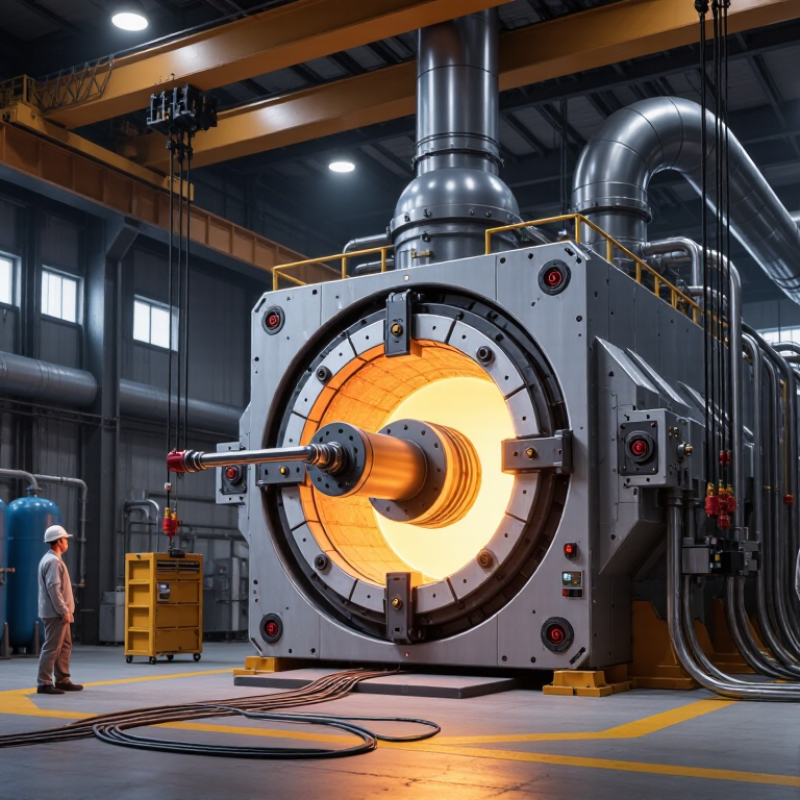
How to Choose a Carbide Furnace in 2026?

What Is a Carbide Furnace and What Does It Produce?

A carbide furnace is a high-temperature electric furnace used to produce calcium carbide from quicklime and carbon materials. Submerged electrodes deliver electrical energy into the charge, creating an intense reaction zone. Chemically, calcium oxide combines with carbon to form calcium carbide and carbon monoxide. The main product is usually tapped as hot, irregular lumps.

Calcium carbide can generate acetylene when it reacts with controlled amounts of water. The furnace also produces carbon monoxide, dust, heat, and a lime-rich slag. These outputs require enclosed gas collection, filtration, monitoring, and proper waste handling.

A dependable furnace keeps the material bed moving evenly. Electrode stability, feed size, moisture, and power control all influence carbide quality. Small changes can matter.

When choosing a carbide furnace in 2026, look beyond its advertised capacity. Check energy consumption, electrode regulation, tapping performance, lining life, and emission controls. Maintenance access deserves attention too. A common plant lesson is simple: stable operation often matters more than peak output. Still, no furnace can compensate for wet carbon or inconsistent lime. That point is easy to overlook. Supplier data may appear exact, but real plant conditions are less predictable. The better choice fits the feedstock, production target, operator skills, and local environmental requirements.

Which Raw Materials and Furnace Types Fit Your Production Needs?

Choosing a carbide furnace in 2026 starts with raw material behavior, not catalog capacity. For calcium carbide, quicklime needs stable calcium oxide content and low moisture. Carbon materials should offer predictable fixed carbon, suitable particle size, and limited ash. Excess ash can increase slag, power consumption, and cleaning work. A practical trial should measure reactivity, electrical resistance, and charge descent. Do not rely on supplier certificates alone. Weigh incoming material, inspect storage conditions, and compare furnace readings across several batches. Small differences in coke sizing can disturb electrode current and cause uneven heating. Easy to miss.

Furnace type must follow output, energy targets, and environmental controls. An open furnace may suit smaller operations, but it releases more process gas. Strong local ventilation becomes essential. A semi-closed design improves gas capture and allows simpler maintenance access. A closed submerged-arc furnace improves gas recovery and process stability. It needs tighter sealing, automated feeding, and skilled electrode management. For continuous, high-volume production, that complexity can be justified. For variable feedstock, it may become a burden. Engineers should compare electrode consumption, transformer range, downtime, and actual kWh per tonne, not only rated capacity. I would leave room for error. Feedstock tests may not represent rainy-season deliveries or aging storage piles. Pilot data, operator experience, and independent inspection often reveal problems that polished proposals miss.

How to Compare Capacity, Temperature Control, and Energy Efficiency

How to Choose a Carbide Furnace in 2026?

Choosing a carbide furnace starts with the real production load, not the advertised chamber size. Measure your typical batch, including trays, fixtures, and spacing for airflow. A furnace that is too large may waste energy during every cycle. One that is too small can create uneven heating and frequent delays. Compare usable capacity, maximum load weight, and temperature uniformity at different chamber positions.

Temperature control deserves careful testing. Ask for ramp-rate data, sensor locations, and recorded temperature deviation. A reliable system should maintain stable heat near the required carbide processing range, even after repeated cycles. Digital controls are useful, but calibration history matters more. I have seen specifications look impressive while the loaded chamber performed differently. Request a trial using similar materials and fixtures. Check the heating curve, holding time, and cooling behavior.

Tips: Compare energy use per batch, not only rated power. Inspect insulation thickness and door sealing. Measure standby consumption overnight. Confirm whether heating elements and sensors are easy to replace. Leave space for future batch growth, but avoid buying excessive capacity. My own comparison would include three logged cycles, because one successful run can hide instability. Also review maintenance access, operator training, and safety interlocks before judging the final cost.

What Safety, Automation, and Maintenance Features Should You Prioritize?

Choosing a carbide furnace in 2026 should begin with risk control, not maximum temperature. The chamber needs independent overtemperature protection, a reliable emergency stop, and door interlocks that prevent unsafe access. Confirm that gas, pressure, and cooling-water sensors trigger alarms before a fault becomes an incident. Process-gas monitoring and effective ventilation are equally important. Look for clear alarm messages, not a confusing wall of codes. A well-designed furnace also records temperature, power, and pressure trends for each batch. These records support audits and help technicians identify drift early.

Automation should reduce decisions during stressful moments. A programmable controller can manage heating ramps, hold times, cooling stages, and controlled shutdowns. Remote notifications are useful, but they should never replace local visual and audible alarms. Ask whether the system has backup power for safe shutdown and protected user permissions. Encrypted connections and regular software updates reduce operational exposure. Still, automation is not perfect. A badly tuned sensor can create false confidence. Require calibration records and a manual operating procedure.

Maintenance features often decide the furnace’s real cost. Choose accessible inspection points, replaceable heating elements, durable seals, and easy-to-clean dust paths. Cooling-water flow should be visible, tested, and linked to an automatic shutdown. Ask how quickly technicians can inspect refractory lining, thermocouples, electrical cabinets, and ventilation routes. Keep spare sensors and critical seals on site. Small delays become expensive. Before purchase, review service intervals, training requirements, and compliance with applicable safety standards. If these details are vague, pause and investigate.

How to Choose a Carbide Furnace in 2026?

Safety, automation, and maintenance priorities for carbide-furnace procurement

This 100-point evaluation model gives the highest weight to safety systems, including emergency shutdowns, door interlocks, over-temperature protection, and effective exhaust control. Automation improves process consistency and traceability, while maintenance access, spare-part availability, and condition monitoring help reduce unplanned downtime. The framework is aligned with common industrial furnace safety and risk-assessment practices, including EN 746-2, NFPA 86, and ISO 12100 principles.

How to Evaluate Total Cost, Compliance, and Long-Term Reliability

How to Choose a Carbide Furnace in 2026?

A carbide furnace should be judged by total cost, not purchase price. Include installation, power demand, cooling water, graphite parts, calibration, labor, and planned downtime. The U.S. Department of Energy’s Industrial Decarbonization Roadmap identifies process heating as roughly half of manufacturing energy use. Small efficiency losses can become large monthly expenses.

Ask for measured energy use per production cycle. Request thermal uniformity records, not only sales estimates. The IEA’s Energy Efficiency 2023 report states that industry consumed about 37% of global final energy in 2022. That figure makes furnace efficiency a financial issue, not merely an environmental preference. I would distrust a payback calculation that excludes idle heating and maintenance.

Compliance must cover electrical safety, ventilation, dust control, vacuum systems, and local emissions requirements. Confirm documentation against applicable standards, such as NFPA 86 and ISO 50001 practices. Check alarm histories and interlock tests. Paperwork alone is weak evidence.

Reliability is visible in details. Ask about mean time between failures, spare-part lead times, service response, and temperature drift after long cycles. A clear data log matters. So does operator training. One overlooked weakness is software dependence; a furnace may operate well until a controller becomes obsolete. Require exportable records, manual recovery procedures, and a realistic five-year maintenance budget. Then compare output stability, not just rated capacity.

How to Choose a Carbide Furnace in 2026? - How to Evaluate Total Cost, Compliance, and Long-Term Reliability

Evaluation Dimension Open Submerged-Arc Furnace Semi-Closed Furnace Closed Furnace with Gas Recovery How to Evaluate in 2026
Typical electrical capacity 5–25 MVA 10–40 MVA 20–90+ MVA Confirm transformer, electrode-column, busbar, and utility-grid capacity under continuous operation.
Indicative carbide output Approximately 5–25 tonnes/day Approximately 15–45 tonnes/day Approximately 30–120+ tonnes/day Use guaranteed output at the specified raw-material quality, not the maximum nameplate rating.
Specific electricity consumption 3,200–3,600 kWh/t carbide 3,000–3,400 kWh/t carbide 2,800–3,200 kWh/t carbide Require a performance guarantee based on measured energy per saleable tonne, including start-up and electrode losses.
Approximate electricity cost at US$0.07/kWh US$224–252/t carbide US$210–238/t carbide US$196–224/t carbide Recalculate using the local tariff, demand charges, power factor penalties, and expected annual load factor.
Carbon monoxide gas recovery Generally unavailable or very limited Approximately 50–80% of generated gas, subject to sealing quality Approximately 85–98% with a properly sealed furnace and gas-cleaning system Verify gas composition, pressure control, flare capacity, emergency venting, and permitted reuse or destruction route.
Particulate capture potential Approximately 70–85% with local extraction Approximately 90–97% Typically 98% or higher when hooding and bag-filter design are correctly sized Check guaranteed outlet concentration in mg/Nm³, airflow volume, filter temperature, pressure drop, and continuous monitoring provisions.
Indicative furnace availability 85–90% 88–93% 90–95% after commissioning and process stabilization Define availability as scheduled operating hours minus forced outages, excluding planned maintenance agreed in the contract.
Electrode consumption Approximately 18–25 kg/t carbide Approximately 16–23 kg/t carbide Approximately 15–22 kg/t carbide Assess electrode quality, paste baking, column sealing, slipping control, and the cost of electrode breakage.
Relative installed capital cost Low; use index 100 as a baseline Medium; approximately index 115–135 High; approximately index 140–180 Include furnace, transformer, gas cleaning, cooling water, civil works, electrical substation, installation, commissioning, and contingency.
Maintenance complexity Low to medium; higher exposure to dust and heat Medium; requires reliable hood and sealing systems High; includes gas circuit, filters, valves, instrumentation, and safety interlocks Compare annual maintenance cost, critical spare inventory, local service capability, and planned outage duration.
Water-cooling requirement Lower to medium Medium to high High; usually requires redundant pumps, heat exchangers, alarms, and emergency cooling Evaluate water quality, redundancy, leak detection, emergency shutdown, and consequences of cooling failure.
Compliance readiness More difficult where particulate, CO, and visible-emission limits are strict Generally suitable with correctly designed extraction and filtration Best fit for stringent emission control and gas-management requirements Confirm local permits for particulate matter, CO, fugitive emissions, noise, wastewater, hazardous energy, and greenhouse-gas reporting.
Automation and data availability Basic current, voltage, temperature, and alarm monitoring Distributed control with improved process logging Advanced control for power, pressure, gas flow, cooling, electrodes, and emissions Require historian access, alarm records, cybersecurity controls, remote diagnostics, and exportable production data.
Best-fit operating situation Small capacity, lower initial budget, and less restrictive emission conditions Medium capacity requiring a balance between investment and environmental performance Large continuous production, high electricity cost, gas-utilization opportunity, and strict permitting Select according to the lowest risk-adjusted cost per saleable tonne, not the lowest purchase price.
Planning note: The numerical ranges are indicative engineering benchmarks for preliminary comparison. Actual results depend on furnace size, raw-material chemistry and particle size, power quality, operating practice, product specification, local utility tariffs, environmental permits, and maintenance standards. Final selection should be based on independently witnessed performance testing and site-specific total-cost-of-ownership calculations.
Total Cost of Ownership Check Recommended Calculation Evidence to Request
Energy Specific kWh/t × annual saleable tonnes × delivered electricity price Guaranteed energy test, tariff analysis, and power-quality records
Gas value or disposal cost Recoverable gas volume × usable energy value minus cleaning, compression, and flare costs Gas composition, flow range, pressure stability, and utilization design
Maintenance and spares Annual planned maintenance + expected forced-outage repairs + critical spares Five-year spare-parts list, lead times, service staffing, and outage schedule
Compliance Monitoring, filtration, gas safety, wastewater, waste handling, and reporting costs Emission guarantees, permit-support documents, safety studies, and monitoring specifications
Lost production risk Expected downtime hours × contribution margin per saleable tonne Reference operating data, availability definition, warranty remedies, and response-time commitments