
How to Choose the Best L7e Quadricycle for Global Buyers?
Choosing the right L7e Quadricycle is no longer a simple question of price, range, or appearance. Buyers must examine safety, battery performance, charging access, payload, weather protection, and local approval requirements. Under European Regulation 168/2013, many L7e vehicles are limited to 15 kW, while weight limits differ between passenger and cargo models. Global buyers should not assume that European specifications apply everywhere.
Market data shows why careful evaluation matters. The International Energy Agency’s Global EV Outlook 2024 reported more than 14 million electric car sales worldwide in 2023, reflecting stronger demand for smaller electric transport. However, L7e Quadricycle registrations are often grouped within broader light-vehicle categories. That reporting gap makes direct global comparisons difficult. A neat sales chart may still hide important differences.
Safety deserves closer attention. Euro NCAP’s quadricycle testing has repeatedly shown that compact size does not guarantee passenger protection. Michiel van Ratingen, Euro NCAP’s Secretary General, stated, “Quadricycles are not cars, and consumers should not confuse the two.” That warning remains practical, especially when a vehicle has narrow doors, exposed cabin edges, or limited restraint systems.
This guide will compare real-world usability, certification evidence, battery warranties, service coverage, and total ownership cost. Look beyond glossy range claims. A vehicle promising 200 kilometres may deliver less in winter, heavy traffic, or hilly streets. The best choice is rarely the most powerful model. It is the one that fits your roads, climate, charging habits, and legal market. Mistakes are possible, even with careful research.
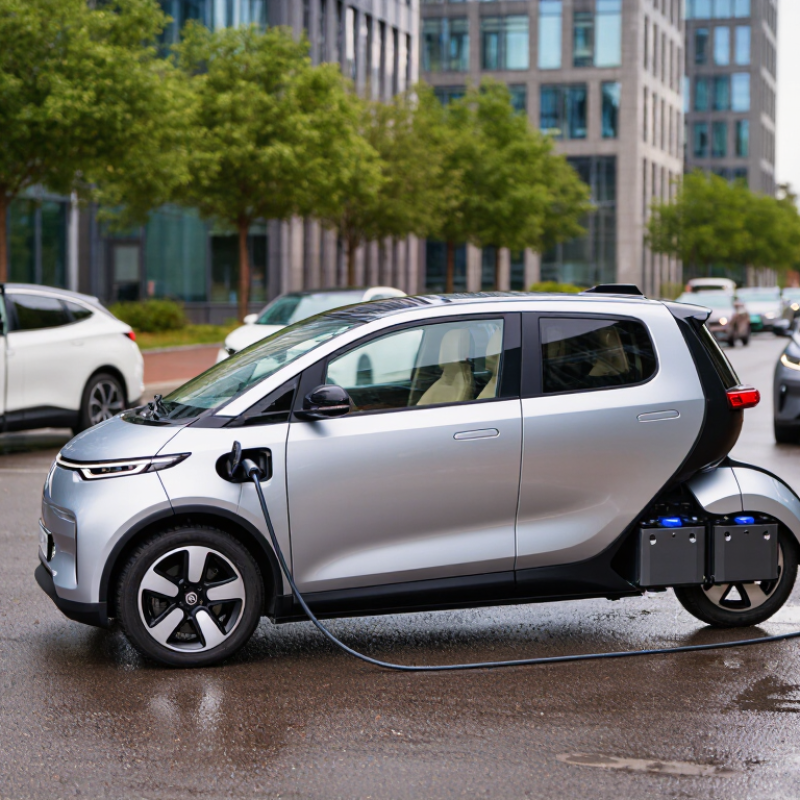
Understanding L7e Quadricycle Categories and Legal Classifications
How to Choose the Best L7e Quadricycle for Global Buyers?
L7e is a legal vehicle category, not simply a marketing term. Under European Regulation (EU) No 168/2013, heavy quadricycles generally allow up to 15 kW of continuous power. Their maximum mass is commonly limited to 450 kg for passenger versions and 600 kg for goods versions, excluding batteries. These limits affect seating, cargo space, battery size, and driving-licence requirements.
L6e models are lighter and usually limited to 45 km/h. L7e vehicles can offer stronger acceleration and better road performance, but local rules still decide where they may operate. Buyers should check type approval, braking tests, lighting, seat-belt requirements, and registration documents in the destination market. A vehicle approved in one European country may need additional procedures elsewhere.
The IEA Global EV Outlook 2024 reported nearly 14 million electric car sales worldwide in 2023. This growth supports demand for compact electric transport, but quadricycle statistics are often grouped separately or omitted. That gap matters. Buyers should not compare an L7e directly with a passenger car. In practical inspections, payload figures can look attractive until battery weight and accessories are included. The specification sheet is useful, but it is not always the complete story. Check the certificate, not only the brochure.
| Legal Category | Official Classification | Typical Vehicle Purpose | Key Technical Definition | Typical Seating or Load Layout | Best-Suited Buyer Requirement | Important Compliance Consideration |
|---|---|---|---|---|---|---|
| L7e General Class | Heavy quadricycle | Road-going light four-wheel vehicle for passenger or goods transport | Four wheels; maximum continuous rated power not exceeding 15 kW; unladen mass generally not exceeding 450 kg for passenger vehicles or 600 kg for goods vehicles, excluding battery mass in electric vehicles. | Passenger or goods configuration, depending on the approved subcategory | Buyers seeking a vehicle regulated below the conventional passenger-car category in the European Union legal framework | L7e is a vehicle-category classification, not a universal global standard. Type approval, registration, insurance and driving-licence requirements must be checked in the destination country. |
| L7e-A | Heavy on-road quadricycle | Urban commuting, short-distance road travel and compact mobility | Designed primarily for use on paved roads and classified within the L7e heavy quadricycle framework, subject to the applicable power, mass and construction requirements. | Usually a compact passenger-oriented layout; the permitted number of seats depends on the specific type approval | City users, commuters, residential communities and fleet operators prioritising compact dimensions and low operating energy use | A vehicle approved as L7e-A may not automatically have the same road access, speed limits or licence treatment in every country. |
| L7e-B | Heavy all-terrain quadricycle | Off-road, agricultural, recreational and mixed-surface operation | Built for all-terrain use and covered by the heavy quadricycle requirements; equipment such as protective structures, tyres and ground-clearance features may affect the applicable approval configuration. | One or more seats, depending on the approved design; may use an open, enclosed or utility-oriented body | Users needing manoeuvrability on unpaved roads, private land, work sites or recreational terrain | Public-road legality should not be assumed from off-road capability. Lighting, braking, mirrors, protective equipment and national registration rules must be verified separately. |
| L7e-B1 | All-terrain quadricycle | Conventional four-wheel all-terrain use | A subcategory of L7e-B intended for all-terrain quadricycle designs with a conventional quad layout. | Generally a single rider or compact rider-and-passenger arrangement, subject to the approved vehicle design | Recreational riders, landowners and operators requiring a narrow, highly manoeuvrable all-terrain vehicle | The approved seating capacity, maximum mass, equipment and road-use permissions must be confirmed from the vehicle’s type-approval documentation. |
| L7e-B2 | Side-by-side all-terrain quadricycle | Work, leisure and utility transport on mixed or rough terrain | A side-by-side seating arrangement within the L7e-B all-terrain category; the design may include a cargo bed or other utility equipment. | Side-by-side seating, with optional or integrated cargo area depending on the approved configuration | Property maintenance, light agricultural work, resort operations and outdoor recreation | Cargo equipment, towing arrangements and off-road accessories must remain within the manufacturer’s approved limits and applicable national rules. |
| L7e-C | Heavy quadricycle other than L7e-A and L7e-B | Enclosed passenger transport or compact goods distribution | A heavy quadricycle category covering vehicles that do not fall under the heavy on-road or heavy all-terrain categories and that meet the relevant L7e-C requirements. | Passenger or goods layout, determined by the CP or CU subcategory | Buyers comparing enclosed urban vehicles, compact delivery vehicles and low-speed commercial transport solutions | The intended use, body type, seating arrangement and cargo design should match the exact subcategory shown on the approval and registration documents. |
| L7e-CP | Heavy passenger quadricycle | Enclosed urban passenger transport | Passenger-oriented L7e-C configuration designed to carry people rather than goods; vehicle dimensions, mass, power and safety equipment remain subject to L7e approval requirements. | Multiple passenger seats may be available, but the exact number is defined by the approved vehicle configuration | Urban families, mobility services, campuses, resorts and local passenger fleets | Passenger capacity, child-restraint requirements, accessibility rules and driving-licence treatment can differ between jurisdictions. |
| L7e-CU | Heavy goods quadricycle | Urban delivery, maintenance and service operations | Goods-oriented L7e-C configuration with a cargo area or enclosed load compartment; the goods-vehicle mass limit is generally up to 600 kg unladen mass, excluding battery mass for electric vehicles. | One or more occupants with a dedicated cargo compartment, subject to the approved design | Last-mile delivery, municipal services, facility maintenance and short-range commercial transport | Payload must be calculated separately from unladen mass and must not exceed the vehicle’s approved maximum mass, axle-load and cargo-restraint limits. |
| Electric L7e | Powertrain configuration, not a separate legal category | Low-emission urban passenger or goods transport | Battery-electric vehicles can be approved within L7e-A, L7e-B or L7e-C subcategories. For mass classification, the battery mass is generally excluded from the specified unladen-mass limits under the EU framework. | Passenger or cargo layout according to the selected L7e subcategory | Buyers prioritising low local emissions, quiet operation and short-range urban mobility | Check charging compatibility, battery certification, thermal safety, end-of-life obligations and local incentives independently from the L7e category. |
| Global Market Check | Destination-country legal assessment | Import, registration and fleet deployment | L7e is primarily an EU legal classification under Regulation (EU) No 168/2013. Countries outside the EU may classify the same vehicle as a quadricycle, light vehicle, microcar, low-speed vehicle, motor vehicle or another local category. | Depends on local registration documents and the vehicle’s approved specification | International buyers, importers, distributors and fleet purchasers | Before purchase, confirm local type approval, left- or right-hand traffic compatibility, road access, speed restrictions, safety equipment, taxation, insurance and driver-licence requirements. |