
How to Choose the Best Car Audio System in 2026?
Choosing the best car audio system in 2026 requires more than counting speakers or chasing impressive wattage. The listening environment matters. Glass, leather, road noise, and seat position can change the sound dramatically. A 2024 Fortune Business Insights report valued the global automotive audio market at approximately $8.94 billion. It projects the market to reach about $13.13 billion by 2032. That growth reflects stronger demand for connected dashboards, immersive sound, and factory-integrated entertainment.
Still, bigger is not always better. Audio researcher Floyd Toole offers a useful principle: “The goal of high-quality audio is to reproduce the original sound as faithfully as possible.” In a vehicle, that means balanced tuning, controlled bass, clear vocals, and low distortion. It does not simply mean louder playback. A well-designed system should let you hear a singer’s breath, a cymbal’s edge, and the quiet space behind a piano. Small details matter.
Your daily drive should guide the decision. A compact commuter may benefit from better front speakers and careful digital signal processing. A large SUV may need stronger low-frequency control and separate rear-zone tuning. Factory systems also deserve closer inspection before replacement. Some integrate climate controls, safety alerts, and vehicle settings. Removing them carelessly can create compatibility problems.
The industry is moving quickly. Not every new feature improves listening. Some systems still sound thin after expensive upgrades. That is an uncomfortable truth. The right choice combines measured performance, professional installation, warranty support, and your own ears. Specifications help. Your listening experience decides.
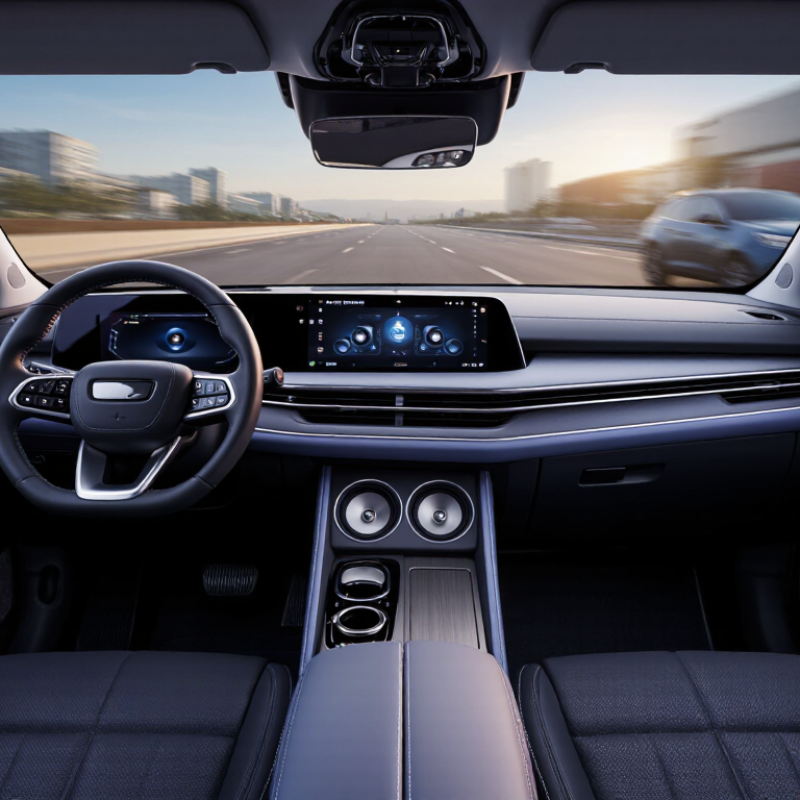
Understanding Car Audio System Types and Core Components
How to Choose the Best Car Audio System in 2026?
Understanding system types prevents expensive mistakes. Factory systems offer clean integration and steering-wheel control, but upgrades can be limited. Component systems separate the tweeters, woofers, amplifier, and subwoofer. They usually create clearer imaging. Coaxial systems combine drivers in one speaker. They cost less and fit tighter spaces.
The core components work as a chain. The head unit manages sources, equalization, and phone connectivity. The amplifier supplies controlled power. Speakers convert that power into sound, while a subwoofer handles deep bass. According to J.D. Power’s 2024 U.S. Initial Quality Study, infotainment problems reached 49.1 issues per 100 vehicles. That figure shows why stable controls matter more than a crowded screen.
Market data also supports careful selection. Grand View Research estimates the global automotive infotainment market will expand strongly through 2030, driven by connected functions and digital interfaces. Yet more features can add delay, noise, and distraction. A practical test is simple: play familiar vocals at moderate volume, then listen for harsh treble or muddy bass. Check whether the system remains balanced with the engine running. I often overestimate advertised wattage. RMS power, speaker sensitivity, cabin acoustics, and installation quality matter more. Even a powerful system can sound thin when its crossover settings are wrong.
How to Choose the Best Car Audio System in 2026? - Understanding Car Audio System Types and Core Components
| System Type | Best Suited For | Typical Core Components | Sound Characteristics | Power Requirement | Installation Complexity | Main Advantages | Main Limitations | 2026 Selection Guidance |
|---|---|---|---|---|---|---|---|---|
| Factory-Style Coaxial System | Drivers who want a simple replacement for worn or damaged factory speakers. | Coaxial speakers, factory head unit, speaker wiring, optional compact amplifier. | Balanced improvement with moderate detail and a relatively compact soundstage. | Usually compatible with factory power; an amplifier can improve headroom. | Low. Speaker replacement is generally straightforward when the vehicle uses standard mounting locations. | Affordable, space-efficient, and easy to integrate with existing controls. | Limited stereo imaging and less control over tweeter placement than a component system. | Choose this type when convenience, compatibility, and minimal modification are priorities. |
| Component Speaker System | Listeners who prioritize clearer vocals, better imaging, and more detailed music reproduction. | Separate woofers, tweeters, passive crossovers, speaker adapters, and optional amplifier. | More precise stereo positioning, smoother high frequencies, and improved midrange clarity. | Works with factory power, but additional clean amplification is often beneficial. | Medium. Correct tweeter placement, crossover mounting, and door treatment affect the result. | Better soundstage, more accurate vocals, and greater tuning flexibility. | Costs more and requires more installation planning than coaxial speakers. | Select this system for music-focused listening and a noticeable improvement in front-stage quality. |
| DSP-Centered System | Vehicles with difficult cabin acoustics, factory equalization, or multiple listening preferences. | Digital signal processor, multi-channel amplifier, speakers, microphones or measurement tools, and tuning software. | Improved tonal balance, time alignment, channel control, and imaging when properly calibrated. | Typically requires dedicated amplifier channels and carefully planned power wiring. | High. Signal integration, gain structure, crossover settings, and cabin tuning require technical skill. | Corrects acoustic problems and provides detailed control without necessarily replacing every factory component. | Higher cost, greater setup complexity, and poor tuning can reduce performance. | Choose this approach when precision, integration, and adjustable sound profiles are more important than simplicity. |
| Powered Subwoofer System | Drivers who want stronger low-frequency impact while preserving cargo space. | Subwoofer driver, built-in amplifier, enclosure, low-pass filter, and signal input. | Adds depth and impact to bass without requiring a separate amplifier and enclosure installation. | Requires a fused power connection and suitable grounding; demand varies by amplifier output. | Low to medium. Integration and secure mounting are the main installation concerns. | Space-efficient, convenient, and effective for improving bass in an otherwise standard system. | Less upgrade flexibility and generally lower maximum output than a separately selected subwoofer and amplifier. | Select this option when bass improvement is the main goal and available space is limited. |
| Fully Active Multi-Amplifier System | Enthusiasts seeking maximum control, output consistency, and system adjustability. | DSP, separate amplifier channels, active crossovers, component speakers, subwoofer, and upgraded wiring. | High clarity, strong dynamics, precise imaging, and extensive frequency-response control. | Highest among the listed options; electrical capacity, fusing, and heat management must be evaluated. | High. It requires careful system design, wiring, tuning, and secure equipment placement. | Maximum tuning flexibility and the ability to optimize each speaker independently. | Most expensive and intrusive option, with greater demand for professional installation and calibration. | Choose this system when performance and customization outweigh installation time, cost, and space requirements. |
Core Car Audio Components and Their Roles
| Component | Primary Function | Important Selection Factors | Common Compatibility Considerations |
|---|---|---|---|
| Source Unit | Provides audio playback, user controls, connectivity, and source selection. | Digital connection options, preamp outputs, display usability, equalization, and vehicle integration. | Some vehicles rely on integrated displays, steering-wheel controls, or factory safety functions. |
| Speakers | Convert amplified electrical signals into audible sound. | Impedance, sensitivity, mounting depth, frequency range, power handling, and installation location. | Door dimensions, factory brackets, grille clearance, and weather exposure must be checked. |
| Amplifier | Increases signal power so speakers can play louder with improved headroom. | Continuous power rating, channel count, efficiency, thermal management, and input type. | Power delivery should match speaker impedance and the vehicle’s electrical capacity. |
| Digital Signal Processor | Shapes frequency response, crossover points, time alignment, and channel levels. | Input flexibility, equalizer bands, delay range, tuning software, and preset support. | Correct signal integration is essential when retaining factory audio processing. |
| Subwoofer and Enclosure | Reproduces low frequencies that small door speakers cannot deliver efficiently. | Driver size, enclosure type, internal volume, amplifier power, and available vehicle space. | The enclosure must be securely mounted and matched to the subwoofer’s design requirements. |
| Wiring and Electrical Protection | Delivers power and audio signals while reducing installation and safety risks. | Correct wire gauge, fuse rating, grounding point, signal shielding, and secure routing. | Power cables should be fused close to the battery, and signal cables should be routed to minimize noise. |
| Sound-Deadening Materials | Reduces panel vibration and outside noise while improving the working environment for door speakers. | Coverage area, material durability, installation thickness, moisture resistance, and added weight. | Door drains, window mechanisms, trim clearance, and moisture exposure must remain unobstructed. |
Related Posts
-
Top 10 Subwoofers for Car Audiophiles Seeking Deep Bass Experience?
-
2026 Best Car Sound Systems for Ultimate Audio Experience?
-

2026 How to Choose the Best Car Entertainment System for Your Vehicle?
-
2026 Best Car Sound Systems for Ultimate Audio Experience?
-
2026 Best Component Speakers for Unmatched Sound Quality?
-

2026 Best Car Entertainment System Features and Reviews?