
Download the 2025 Focal Car Catalogue | Focal INSIDE Catalogue | Join our Mailing List!

Why Choose a Chemical Storage Cabinet for Safe Storage?

Chemical storage is not just a matter of clearing shelf space. A leaking bottle, a faded label, or an incompatible container can turn an ordinary work area into a preventable hazard. OSHA’s Hazard Communication guidance estimates that 32 million workers handle hazardous chemicals and that 650,000 hazardous chemical products are used in the United States. The scale is significant. Even small storage decisions deserve attention.

A Chemical Storage Cabinet helps organize containers, limit access, and provide a more controlled place for chemicals. The right choice depends on the substances stored, their compatibility, container sizes, and the manufacturer’s specifications. For example, acids and flammable liquids may require different storage arrangements; one cabinet is not automatically suitable for every chemical. Check each product’s safety data sheet, cabinet documentation, and applicable workplace requirements before deciding. Labels matter. So does ventilation, where the product guidance calls for it.

In day-to-day use, practical details make a difference: shelves that support the load, doors that close securely, and clear labels that remain readable. A cabinet can reduce exposure to routine storage risks, but it cannot replace careful handling, staff training, or regular inspection. That limitation is easy to overlook. Storage systems also need review when inventory changes, because yesterday’s safe arrangement may not fit today’s chemicals. A considered selection helps protect people and property while making safe storage easier to maintain.
Why Choose a Chemical Storage Cabinet for Safe Storage?

What Is a Chemical Storage Cabinet?

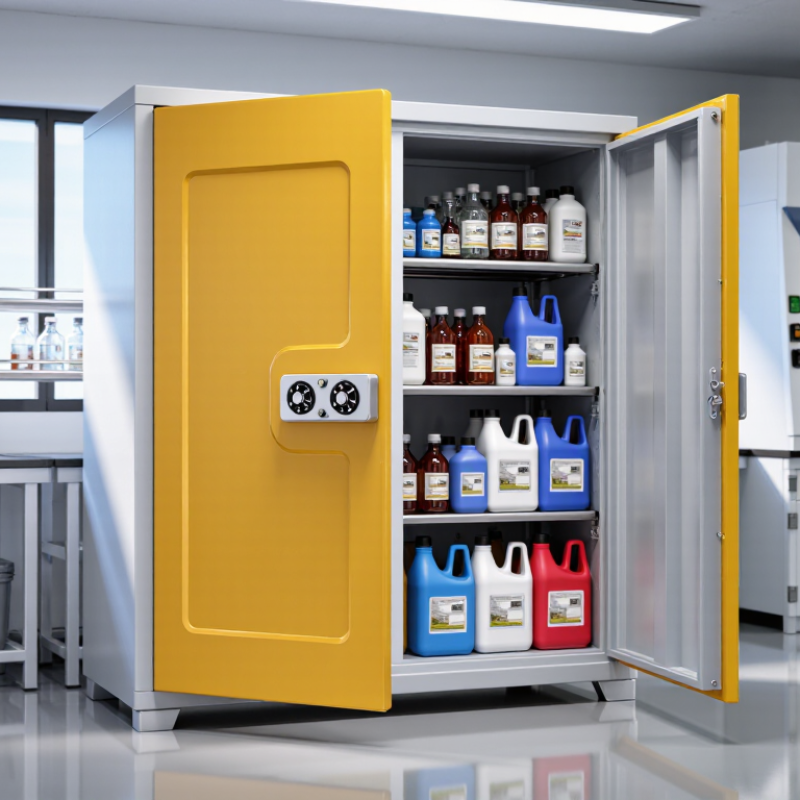
A chemical storage cabinet is a purpose-built enclosure for organizing hazardous chemicals safely. It usually includes steel walls, adjustable shelves, spill-retaining edges, and a self-closing door. Some models provide fire resistance or ventilation connections. The exact design depends on the chemical’s hazard class, quantity, and compatibility requirements.

It is not simply a stronger cupboard. A cabinet separates containers from heat, impact, sunlight, and unauthorized handling. Shelves should keep liquids upright, while secondary containment catches leaks around bottle caps or cracked containers. The U.S. Occupational Safety and Health Administration requires accessible safety data sheets and clear hazard communication under 29 CFR 1910.1200. Storage supports that system, but it cannot replace staff training or regular inspections.

The numbers show why discipline matters. The Bureau of Labor Statistics recorded 2.6 million nonfatal workplace injuries and illnesses in private industry during 2023. Not all involved chemicals, but each event reinforces the cost of weak controls. The U.S. Environmental Protection Agency’s 2022 Toxics Release Inventory recorded 29.8 billion pounds of managed chemical waste, showing the scale of materials requiring careful control. A cabinet may reduce exposure and fire risk, yet it cannot correct incompatible storage or poor labeling. That uncomfortable detail is easy to overlook.

Why Choose a Chemical Storage Cabinet for Safe Storage?

A chemical storage cabinet helps organize hazardous liquids, limit unauthorized access, and support safer storage practices. For flammable liquids, OSHA specifies the following maximum quantities that may be stored in one storage cabinet.

Under OSHA 29 CFR 1910.106(d)(3)(i), a storage cabinet may contain up to 60 gallons of Category 1, 2, and 3 flammable liquids combined, or up to 120 gallons of Category 4 flammable liquids. Always verify local regulations and the chemical manufacturer's storage instructions before use.

Which Hazards Do Chemical Storage Cabinets Control?

Chemical storage cabinets control several hazards at once. They limit fire exposure, reduce vapor release, contain small leaks, and separate incompatible chemicals. A flammable-liquid cabinet uses a closed, fire-resistant enclosure. It also keeps containers away from ignition sources, walkways, and untrained handling.

The U.S. Bureau of Labor Statistics recorded 5,283 fatal workplace injuries in 2023. This figure covers every industry, not chemical storage alone. Still, it shows why prevention needs more than warning labels. OSHA 1910.106 and NFPA 30 address flammable-liquid storage, ventilation, container limits, and cabinet construction. A compliant cabinet can slow fire growth. It cannot correct poor housekeeping.

Chemical compatibility is another major control. Acids, bases, oxidizers, and reactive materials may require separate cabinets or dedicated compartments. A spill tray can catch a leaking bottle, while adjustable shelves keep containers upright and visible. The UK Health and Safety Executive reported 1.7 million workers with work-related illness in 2022/23. That broad figure includes many causes, so it should not be treated as chemical-storage evidence. It does reinforce one practical lesson: exposure controls must be maintained daily. A cabinet is not magic. Doors must close, labels must remain readable, and damaged containers need prompt attention. Small oversights still matter.

Why Choose a Chemical Storage Cabinet for Safe Storage? - Which Hazards Do Chemical Storage Cabinets Control?
Chemical Hazard Recommended Cabinet Type Main Control Provided Typical Safety Features Examples of Chemicals Important Limitation
Fire and flash hazards Flammable-liquid cabinet Reduces the likelihood that stored flammable liquids will be exposed to an external ignition source and helps delay fire involvement. Double-wall construction, protected air space, self-closing doors, spill-retaining shelves, and clear flammable-liquid labeling. Flammable solvents, alcohols, acetone, toluene, and certain paints or cleaning liquids. A cabinet does not make flammable liquids nonflammable. Keep ignition sources away and follow applicable quantity limits and local fire-code requirements.
Combustible-liquid hazards Combustible-liquid cabinet Provides organized, contained storage that can reduce spill spread and unnecessary exposure to heat or ignition sources. Leak-resistant shelves, raised door sills or a liquid-tight bottom, secure doors, and hazard identification labels. Some oils, coatings, hydraulic fluids, and other liquids with combustible flash points. Flash point and storage classification must be confirmed from the current Safety Data Sheet (SDS); not every combustible liquid requires the same cabinet configuration.
Corrosive acid hazards Acid-corrosive cabinet Controls container damage, leakage, and contact with incompatible materials by providing corrosion-resistant, segregated storage. Corrosion-resistant interior, leak-containment shelves or trays, secure doors, and acid-specific identification. Hydrochloric acid, nitric acid, sulfuric acid, and phosphoric acid. Acids must be segregated from bases, cyanides, sulfides, reactive metals, and other incompatible substances. Nitric acid may require separate oxidizing-acid storage.
Corrosive base hazards Base-corrosive cabinet Helps prevent leaks and protects nearby equipment and personnel from corrosive contact during routine storage. Compatible corrosion-resistant surfaces, spill containment, stable shelving, and clear corrosive-material labels. Sodium hydroxide, potassium hydroxide, ammonium hydroxide, and concentrated alkaline cleaners. Strong bases should not be stored with acids. Compatibility must be checked for cabinet materials, containers, and nearby chemicals.
Oxidizer hazards Oxidizer cabinet Separates oxidizing chemicals from fuels and other materials that could intensify combustion or trigger a hazardous reaction. Dedicated storage, noncombustible or chemically compatible shelving, spill containment, and oxidizer identification. Hydrogen peroxide solutions, nitrates, permanganates, chlorates, and perchlorates. Oxidizers should be kept away from flammable liquids, organic materials, reducing agents, and contamination sources. A general-purpose cabinet is not automatically suitable.
Toxic or highly hazardous chemical exposure Secure chemical cabinet Reduces unauthorized access, accidental contact, and uncontrolled release during storage. Lockable doors, restricted-access procedures, secondary containment, inventory control, and hazard labels. Toxic laboratory reagents, certain pesticides, heavy-metal compounds, and highly hazardous process chemicals. Cabinet storage alone does not control vapor toxicity. Ventilation, exposure controls, PPE, emergency planning, and SDS procedures remain necessary.
Reactive and unstable chemical hazards Specialized reactive-storage cabinet Provides controlled segregation and reduces the chance of impact, heat, contamination, or contact with incompatible chemicals. Dedicated compartments where appropriate, secure shelving, temperature controls when required, and prominent hazard labeling. Water-reactive materials, peroxide-forming chemicals, pyrophoric substances, and certain polymerizing monomers. Some reactive chemicals require specialized engineering controls, inert-gas systems, refrigeration, or dedicated storage procedures beyond a standard cabinet.
Spill and container-failure hazards Cabinet with secondary containment Collects small leaks and spills, helping prevent chemical migration to floors, drains, workstations, or incompatible storage areas. Raised edges, leak-resistant shelves, removable spill trays, liquid-tight bases, and stable container positioning. Liquid acids, bases, solvents, oils, and laboratory reagents stored in bottles or small drums. Secondary containment is not a substitute for compatible containers, routine inspections, spill response equipment, or proper disposal procedures.
Incompatible-chemical contact Segregated chemical cabinet system Reduces the probability that incompatible chemicals will mix during normal storage, a spill, or container failure. Separate cabinets or compartments, compatibility-based labeling, dedicated trays, and organized inventory placement. Acids and bases; oxidizers and flammables; water-reactives and aqueous materials; cyanides and acids. Storage groups must be determined from SDS information and a chemical compatibility chart rather than by alphabetical order alone.
Unauthorized access and poor organization Lockable chemical storage cabinet Improves access control, inventory visibility, labeling consistency, and housekeeping in laboratories, workshops, and industrial areas. Lockable handles, adjustable shelves, inventory records, visible hazard labels, and designated storage locations. Frequently used laboratory chemicals, maintenance chemicals, cleaning agents, and process samples. Access control must be supported by employee training, written procedures, inspections, and a current chemical inventory.

How Does a Chemical Storage Cabinet Protect Users and Facilities?

A chemical storage cabinet does more than hide containers. It creates a controlled barrier between hazardous liquids, workers, and nearby equipment. A closed door can reduce splash exposure and limit access during routine work. Built-in shelves and spill containment help keep bottles upright when a container leaks. That small detail matters. A few spilled milliliters can damage flooring, release fumes, or reach a drain. Clear labels also help staff identify contents before opening the cabinet.

Protection depends on matching cabinet construction to chemical properties. Corrosive products need corrosion-resistant storage, while flammable liquids require a cabinet designed for fire protection. Incompatible chemicals should not share the same space without suitable separation. Check each Safety Data Sheet before storage. Follow site procedures and applicable safety requirements. A cabinet is not universal protection. It cannot correct poor ventilation, missing labels, or careless handling.

During practical inspections, trained workers examine doors, shelves, seals, and spill trays. They look for rust, residue, damaged containers, and blocked access. Keep heavy bottles low. Store only what the cabinet can safely support. A simple inventory reduces forgotten or expired materials. Human mistakes still happen. Someone may return a bottle to the wrong shelf after a rushed task. Regular checks, clear training, and honest reporting can expose these weak points before they affect people or facilities.

What Features Should a Safe Chemical Storage Cabinet Include?

Why Choose a Chemical Storage Cabinet for Safe Storage?

A chemical storage cabinet should control hazards, not simply hide containers. OSHA 1910.106 limits flammable-liquid storage to 60 gallons for Categories 1–3 and 120 gallons for Category 4 per cabinet. NFPA 30 provides related design guidance for fire-resistant storage. These figures matter during daily handling and emergency response.

A safe cabinet needs double-wall steel construction, sealed seams, and a raised leak-retaining sill. Adjustable shelves should support heavy containers without bending or tipping. Self-closing doors, a reliable latch, and clear hazard labels reduce mistakes. Vent connections may help control vapors, but they must be installed according to site risk assessments. One detail is often missed: incompatible chemicals need separate cabinets or segregated compartments. Acids beside bases create a preventable problem.

Tips: Check the safety data sheet before storage. Keep containers closed and upright. Record the cabinet’s contents and inspect it monthly. Do not overload shelves. A cabinet is not a magic box. OSHA guidance supports routine inspections, yet real workplaces can become untidy quickly. That weakness deserves honest attention. Temperature, corrosion, cabinet location, and worker training also affect safety. Select capacity from actual inventory, not optimistic estimates. Use professional fire-protection guidance when local requirements are unclear.

How Should Chemicals Be Organized and Maintained Inside the Cabinet?

A chemical storage cabinet protects more than containers; it creates a controlled place for daily handling. Safe storage begins with compatibility, not alphabetical order. Keep acids away from bases, oxidizers away from fuels, and water-reactive materials away from moisture sources. Use the safety data sheet to confirm hazards before assigning a shelf. Never rely on memory. Place heavier bottles on lower shelves, with labels facing outward. This reduces lifting strain and makes missing containers easier to notice.

Use secondary containment trays beneath liquid containers. Select trays that resist the chemicals they hold, rather than choosing plastic by habit. Leave enough space between bottles for inspection and removal. Do not overfill the cabinet. Keep incompatible liquids in separate cabinets when required by the hazard assessment and local rules. Maintain an inventory showing the product name, concentration, quantity, and date received. Mark damaged, leaking, or outdated containers for prompt evaluation through approved procedures.

Routine maintenance should be simple and documented. Wipe shelves with a chemically compatible method, and never mix cleaning agents casually. Inspect hinges, seals, shelves, and cabinet surfaces for corrosion or damage. Keep doors closed except during access. Check labels during each inspection, especially after transferring materials. A tidy shelf can still hide a problem. I have learned that small crusts around caps deserve attention, even when no odor is present. Weekly visual checks are useful, but unusual changes require immediate review of the SDS and site procedures.