Best Subwoofers for Cars in 2026 Which One Should You Choose?
When it comes to enhancing your car audio experience, finding the right subwoofer for car is essential. A quality subwoofer can elevate your sound system, delivering deep bass and clarity. However, with so many options available in 2026, choosing the best one can be overwhelming.
What should you consider when selecting a subwoofer for car? Factors such as size, power, and installation complexity play a significant role. Each driver type offers unique benefits. Some provide thunderous beats, while others focus on precision. This variety can lead to confusion for buyers.
Mistakes can happen during selection. It's easy to overlook compatibility with your car’s audio system. Measuring available space is crucial but often forgotten. Investing time in research is necessary to avoid disappointment after purchase. Balancing your needs with available features ensures you get the best value in your audio upgrade.
Key Features to Consider When Choosing a Car Subwoofer
Choosing the right car subwoofer can be a daunting task. It’s crucial to consider several key features that can greatly impact your experience. Power handling is significant. Look for subwoofers that can handle both peak and RMS power efficiently. A sub with high RMS power will produce deeper sounds without distortion.
Size matters too. Larger subwoofers usually deliver more bass. However, ensure it fits in your vehicle! A 12-inch sub can provide impressive sound, while a smaller option may fit better in compact cars. Don’t overlook the enclosure. The right box affects sound quality. Sealed boxes produce tighter bass, while ported boxes enhance volume.
Tip: Don't rush! Test different setups if you can. Listen to your choice with various music genres. Bass can vary dramatically across songs. Also, consider your budget. High-end subwoofers may offer great performance but can be overkill for casual listening.
Think about installation as well. Some people can handle DIY, while others might need professional help. Complexity can lead to additional costs. Research options that fit your skill level for installation. Always prioritize features that align with your listening habits and comfort level.
Best Subwoofers for Cars in 2026 - Key Features to Consider When Choosing a Car Subwoofer
| Subwoofer Size |
Power Handling (RMS) |
Frequency Response |
Sensitivity |
Enclosure Type |
Price Range |
| 10 inches |
300W RMS |
30 - 200 Hz |
85 dB |
Ported |
$100 - $150 |
| 12 inches |
400W RMS |
25 - 180 Hz |
90 dB |
Sealed |
$150 - $200 |
| 15 inches |
600W RMS |
20 - 160 Hz |
87 dB |
Ported |
$200 - $300 |
| 8 inches |
200W RMS |
40 - 200 Hz |
82 dB |
Sealed |
$80 - $120 |
Top Brands Offering Quality Subwoofers for Cars in 2026
When looking for quality subwoofers for cars in 2026, various brands are leading the market. Many enthusiasts prioritize sound clarity and bass depth. Each manufacturer showcases unique features. However, not all options might be suitable for every car type. Space and power requirements can vary significantly.
Some brands excel in portability, while others focus on maximizing sound output. A compact model can work well for smaller vehicles. Larger models may offer richer sound, filling the car interior with deep bass. It’s essential to consider your listening preferences. Some drivers prefer a crisp sound, while others crave pounding bass.
Budget is another crucial factor. Expensive doesn’t always mean better quality. Sometimes, mid-range options perform surprisingly well. Research is vital before making a choice. Checking user reviews can provide insights into reliability and performance. Remember, your car's acoustics play a significant role. Test different setups if possible.
Best Subwoofers for Cars in 2026: Performance Comparison
This chart represents the performance comparison of the best subwoofers for cars in 2026 based on key metrics such as Bass Depth, Power Handling, Sensitivity, and Size. Each metric is crucial for understanding the overall sound quality and performance of a subwoofer.
Comparative Analysis of Subwoofer Types: Ported vs. Sealed
When choosing a subwoofer for your car, understanding the differences between ported and sealed designs is crucial. Ported subwoofers have a vent that allows air to escape, creating a louder sound. They excel in deep bass, which can be thrilling for many. However, they may lack precision.
Sealed subwoofers, on the other hand, provide tighter, more accurate bass. They are usually smaller and easier to fit into various spaces. This might appeal to those who prefer clarity over sheer volume. Still, getting the right fit can be a challenge.
Tips: Ensure you consider your music preferences. If you love hard-hitting beats, a ported design might be for you. For acoustic or vocal-focused music, sealed could be better. Remember to evaluate the space in your car. Sometimes, the best choice is not the loudest but the one that fits your needs.
Installation Tips for Optimal Performance of Car Subwoofers
Installing a car subwoofer involves careful consideration for optimal performance. Many enthusiasts overlook the importance of placement. The subwoofer should be located away from potential obstructions. A corner position can enhance bass response, but it may also create uneven sound. A poorly placed sub can lead to distortions, which detracts from the listening experience.
Wiring is another critical factor. Proper gauge wiring is essential to prevent power loss. A report from the International Audio Society notes that using insufficient wire can reduce output by up to 30%. Additionally, many users underestimate the importance of a solid ground connection. Without it, the system may suffer from unwanted noise interference.
Sound tuning can't be overlooked, either. Many car audio systems benefit from tuning but often remain factory settings. Adjusting the crossover frequency can enhance overall sound quality. A well-tuned subwoofer can produce deeper, clearer bass, enriching the listening experience. However, it requires patience and careful adjustments. Each vehicle and audio system is unique, and understanding this can drive a listener to refine their setup continuously.
User Reviews and Ratings: What to Look for in Subwoofers
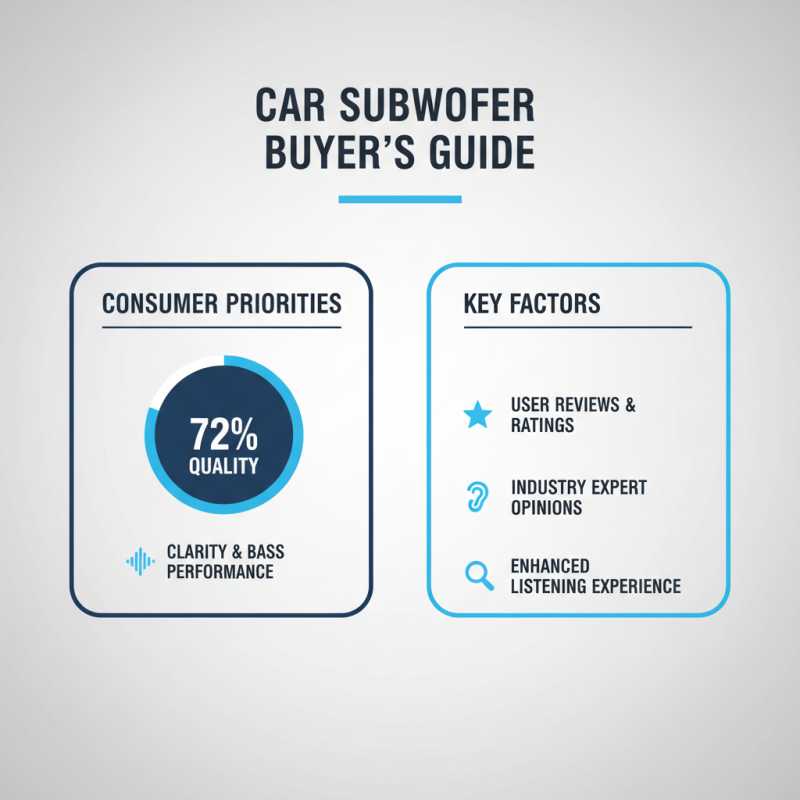
When selecting a car subwoofer, user reviews and ratings are crucial. Understanding what makes a subwoofer appealing can enhance your listening experience. According to industry professionals, sound quality ranks as the number one priority for 72% of consumers. Look for clarity in bass and overall sound performance, as these factors significantly impact enjoyment.
Tips: Pay close attention to the wattage. Higher wattage often indicates better sound output. However, this shouldn't be your only consideration. It's also essential to check the enclosure type. A well-designed box can greatly enhance sound quality.
User feedback on features is valuable. Many prefer adjustable settings for tuning. A popular option includes built-in equalizers. These allow customization to match personal preferences. However, not all subwoofers come with these features, leading to frustration for some users. Additionally, durability matters. Some models show signs of wear, resulting in mixed reviews. Do thorough research before making a purchase.